
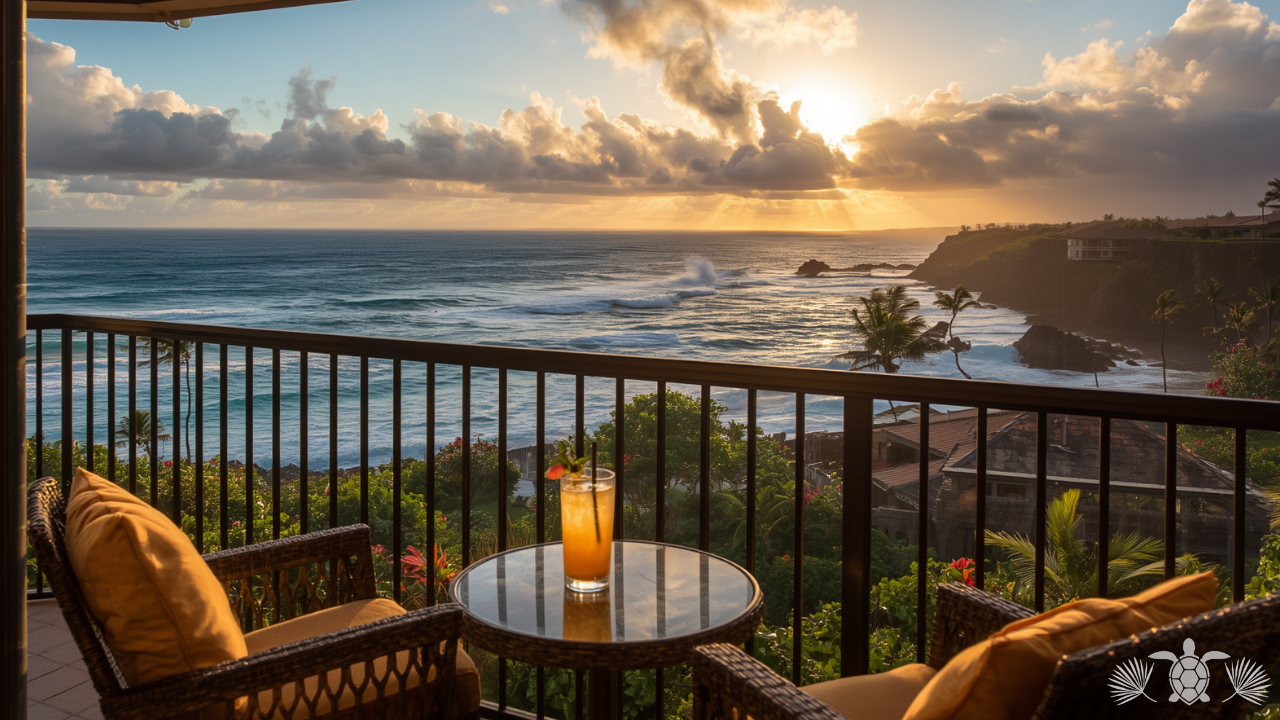
There is a moment that happens to almost every buyer I talk to about oceanfront living in Kona.
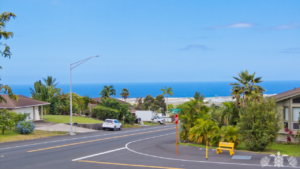
They step onto the lanai. The Pacific stretches out in front of them — infinite, impossibly blue, alive with light. The trade winds move through. Somewhere below, waves are breaking on lava rock. And for a moment, they go completely quiet.
That moment is real. What I want to do in this guide is tell you everything that comes after it — the costs, the communities, the practical realities, and the genuine rewards of oceanfront living in Kona so that when you step onto that lanai, you are ready to make the best decision of your life.
What Oceanfront Living in Kona Actually Means
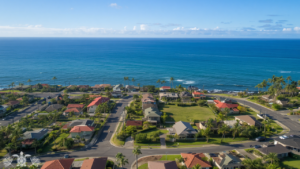
Oceanfront on the West Big Island is not a single experience. It is a spectrum — from resort-adjacent condos steps from a white sand beach to dramatic lava shelf properties where the Pacific crashes directly below your lanai in a display of raw volcanic power.
Understanding which version of oceanfront living in Kona matches your lifestyle is the first and most important decision you will make.
Beachfront vs. Oceanfront: Know the Difference
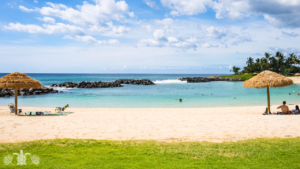
Beachfront properties sit directly on or adjacent to sandy beach areas — Kahaluʻu Beach Park, Kamakahonu Beach, and the resort beaches of the Kohala Coast are the most prominent examples on the West Side. These are the rarest and most premium properties in the Kona market, with prices that reflect both their scarcity and their lifestyle value.
Oceanfront properties sit above the water on lava shelf or elevated coastal terrain — offering dramatic ocean views, direct water access in many cases, and a more rugged, authentically Hawaiian coastal experience. The sound of waves on lava at night is something that once you have slept with it you genuinely miss everywhere else.
What the Ocean View Premium Looks Like in 2026
Ocean proximity commands a meaningful premium in the Kona real estate market — and that premium has held remarkably stable even as the broader market has moderated in 2026.
Properties with direct oceanfront position or unobstructed first-row ocean views consistently command 20% to 40% premiums over comparable inland properties in the same neighborhood and price tier. That premium reflects genuine scarcity — the West Big Island coastline is finite, development is constrained, and truly oceanfront positions are not created, only exchanged.
The Best Communities for Oceanfront Living in Kona
Not all oceanfront communities on the West Side offer the same experience, amenities, or value proposition. Knowing which community fits your priorities is the difference between a purchase you love for decades and one that creates daily friction you did not anticipate.
Alii Drive: The Heart of Kona Oceanfront Living
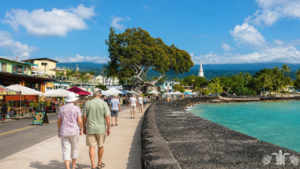
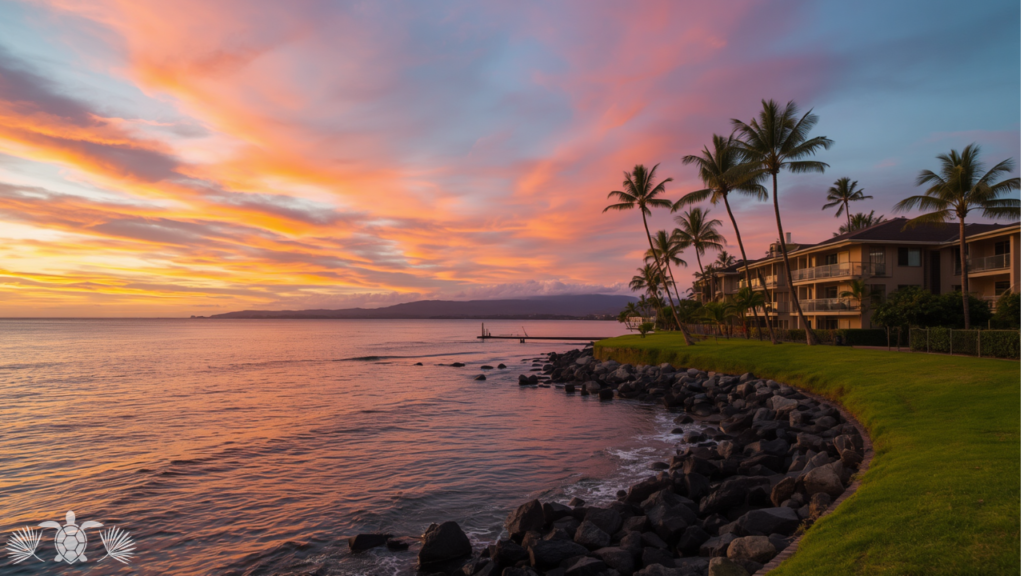
Alii Drive is the defining address for oceanfront living in Kona — a coastal road that threads through Kailua Village and south through Keauhou, lined with condo complexes that have attracted ocean-focused buyers for decades.
Communities along and near Alii Drive — including Casa de Emdeko, Kona Bali Kai, and Kona Reef — put the ocean directly in front of you and the full energy of Kona town within walking distance or a short drive. The Kona Farmers Markets, waterfront restaurants, open-water swimming, and the Ironman finish line are all part of the daily backdrop.
For buyers who want maximum oceanfront lifestyle with maximum community energy, Alii Drive delivers that combination more completely than anywhere else on the West Side.
HOA fees in Alii Drive communities vary considerably — from under $600 to over $1,200 per month depending on the complex, its amenities, and reserve fund health. Always review HOA financial statements before making an offer. Older complexes in particular warrant careful reserve fund scrutiny.
Keauhou and the Southern Corridor
South of the main Kailua-Kona village core, Keauhou offers a slightly quieter version of oceanfront living in Kona without sacrificing access to the water or to everyday services.
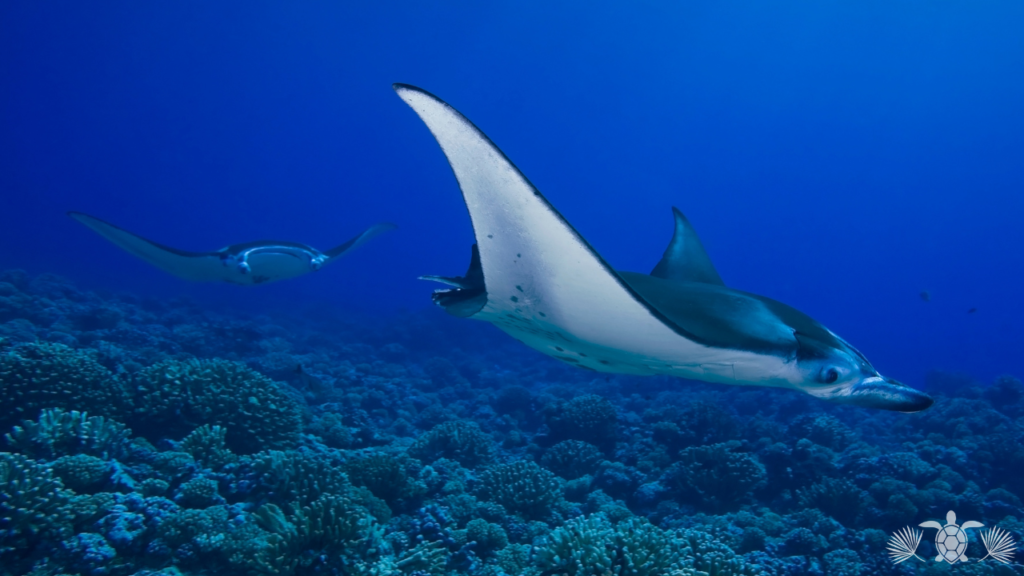
The Keauhou area sits adjacent to one of the most historically significant bays on the Big Island — Keauhou Bay, where the manta ray night dive experience draws visitors from across the world. For residents, those mantas are a regular evening presence visible from certain lanai positions during feeding season.
Keauhou strikes a balance between the social energy of central Kona and the quieter, more residential character of South Kona — making it consistently popular with retirees, remote workers, and buyers who want ocean proximity without the pace of the village core.
The Real Costs of Oceanfront Living in Kona
Oceanfront living in Kona is extraordinary. It is also expensive — not just in purchase price, but in the ongoing costs that come with owning property directly exposed to the marine environment. Understanding the full cost picture before you buy protects you from surprises that can significantly affect your quality of life after closing.
Salt Air, Corrosion, and Maintenance Reality
The salt air environment of direct oceanfront living accelerates corrosion and material degradation in ways that inland properties simply do not experience. Metal fixtures, appliances, HVAC systems, vehicles, and structural elements all face accelerated wear in a marine environment.
Expect higher maintenance costs than you would budget for a comparable inland property. Exterior painting cycles are shorter. Appliances and mechanical systems require more frequent servicing. Vehicles parked near the ocean develop surface rust and corrosion faster than mainland owners are accustomed to.
Budget a meaningful annual maintenance reserve for any oceanfront property you purchase — experienced West Side property managers typically recommend 1.5% to 2% of the property value annually for oceanfront homes, compared to the standard 1% recommendation for inland properties.
Insurance, Lava Zones, and Financing
Most Kona oceanfront properties sit in Lava Zones 3 and 4 — generally insurable through standard carriers and financeable through conventional, FHA, and VA loan products. This is a genuine structural advantage of the West Side over oceanfront properties on the more volcanically active East Side.
However, oceanfront positioning adds its own insurance complexity regardless of lava zone. Flood zone designations, wind exposure ratings, and coastal hazard classifications can all affect your insurance options and premiums in ways that inland properties do not face. Always obtain insurance quotes before finalizing your offer — not after.
HELCO electricity costs are a consistent reality for all West Side homeowners, but oceanfront properties with larger footprints and more extensive outdoor lighting, pool equipment, and appliances can generate monthly bills that surprise buyers coming from energy-efficient mainland homes. Owned solar is not just advisable for oceanfront properties — it is essentially a financial necessity for long-term cost management.
The Lifestyle That Oceanfront Living in Kona Delivers
Beyond the financial picture, oceanfront living in Kona delivers a daily quality of life that is genuinely difficult to fully communicate to someone who has not experienced it. I will try anyway.
Morning and Evening Rituals That Redefine Normal
Waking up to the sound of the Pacific is not a vacation novelty — it becomes the baseline of daily life in ways that quietly and permanently reset your relationship with mornings.
Coffee on the lanai while the sun comes up over Hualalai and spreads across the water. Open-water swimming before the day begins — Kahaluʻu Beach Park and the protected coves along the Alii Drive corridor make early morning ocean swimming a realistic daily ritual rather than an occasional treat. The manta rays that cruise the Keauhou coastline after dark. The green flash at sunset that West Side residents casually mention to visitors who have never seen it before.
These are not amenities. They are the texture of daily life for Kona oceanfront residents, and the buyers who understand that distinction are the ones who make the best decisions about what they are actually purchasing.
Community, Culture, and the Ocean as a Social Space
The ocean in Kona is not a backdrop — it is a gathering place. Open-water swimming groups meet at Kahaluʻu Beach Park in the early morning with the regularity and social warmth of a neighborhood coffee shop. Paddling clubs, dive groups, fishing communities, and snorkel enthusiasts create an ocean-centered social ecosystem that is unlike anything most mainland communities offer.
For buyers who have spent their careers in landlocked cities or suburban environments, the discovery that the ocean creates community as much as it provides scenery is often the most unexpected and meaningful part of oceanfront living in Kona.
The Ironman World Championship — held annually on the Alii Drive corridor — brings the entire Kona oceanfront community together in a way that is genuinely unlike any other community event most mainland residents have experienced. Watching the finish line from your condo lanai on race day is one of those experiences that reminds you exactly why you made this move.
See here what oceanfront and luxury living provide buyers.
What to Know Before Buying Oceanfront in Kona
The oceanfront market on the West Big Island rewards prepared buyers and punishes impulsive ones. Here is what separates the two.
Due Diligence That Oceanfront Buyers Cannot Skip
The standard home inspection scope is not sufficient for oceanfront properties in Kona. Engage an inspector with specific experience in Hawaii coastal properties — someone who knows what salt air corrosion looks like in structural elements, how to assess roof and exterior envelope integrity in a marine environment, and what moisture intrusion patterns to look for in buildings directly exposed to ocean spray and trade wind-driven precipitation.
Request maintenance records going back as far as available, particularly for condo complexes where building envelope integrity and common area maintenance directly affect the value and habitability of your individual unit.
Verify the seawall or coastal protection status of any oceanfront property where erosion or wave impact is a consideration. Hawaii’s coastal erosion patterns are active and ongoing — a property that had adequate setback ten years ago may face a different picture today.
Working With a Local Expert Who Knows the Water
Oceanfront real estate in Kona is a specialty within a specialty. The nuances of coastal exposure, community-specific maintenance histories, HOA reserve fund health, and the micro-variations in ocean view quality between units in the same complex are details that only a local agent with deep oceanfront market experience can navigate reliably.
In my years working the West Big Island oceanfront market, the buyers who end up most satisfied are consistently the ones who took the time to understand what they were buying — not just the view, but the building, the HOA, the insurance picture, and the realistic ongoing cost of maintaining a property that the Pacific Ocean works on every single day.
That knowledge is exactly what I bring to every oceanfront buyer I work with on the West Side.
Ready to Explore Oceanfront Living in Kona?
Oceanfront living in Kona is not for everyone — and that is exactly what makes it right for the people it is for.
If the sound of the Pacific at night, morning coffee with an ocean horizon, and a community built around the water resonate with how you actually want to live — this is the conversation worth having.
I work exclusively across the West Big Island and know the Kona oceanfront market at a level that only comes from years of living and working here. Which buildings have strong HOAs and healthy reserves. Which units in the same complex offer meaningfully better ocean exposure. Which properties are genuinely priced for the market and which are priced for a buyer who has not done the homework.
Let’s make sure you are the buyer who has done the homework.