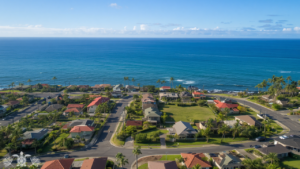

Kona solar homes have been dominating the real estate market on the Big Island. Drive through any neighborhood from Keauhou to Holualoa to the hillside communities above Kailua-Kona and you’ll see rooftops blanketed in panels. Hawaii has one of the highest rates of rooftop solar adoption in the entire country — and on the West Big Island, that number climbs even higher.
So if you’re browsing homes for sale in Kona, Hawaii, the odds are high that a solar system is part of the package. What most buyers don’t realize — especially those relocating from the mainland — is that not all solar is created equal. Whether that system is owned outright or leased from a third party will fundamentally change your financing options, your monthly costs, and your negotiating position. Buying a home in Kona with solar can be a tremendous advantage or a genuine complication, depending entirely on the details.
This guide breaks it all down so you can walk into Kona solar homes negotiations with confidence.
Why Is Solar So Common in Kona Real Estate?
Hawaii consistently ranks among the top states in the country for residential solar adoption, and the Big Island’s West Side leads that charge for two reasons: sunshine and electricity costs.
Kona averages over 270 sunny days per year. The rain shadow created by Hualalai and Mauna Loa means the West Side gets far more direct sunlight than almost anywhere else in the state, making rooftop solar exceptionally productive here compared to national averages.
The second driver is HELCO — the Hawai’i Electric Light Company, which serves the Big Island. Hawaii has some of the highest electricity rates in the nation, consistently running three to four times the mainland average. [STAT: Average residential electricity rate per kWh, HELCO Big Island, 2025] At those rates, a well-sized solar system can eliminate or dramatically reduce a monthly electric bill that would otherwise run $300 to $600 or more for a typical Kona home.
The result is that solar isn’t a luxury add-on in Kona — it’s a practical financial decision that most homeowners eventually make. When you’re buying a home in Kona with solar already installed, you’re inheriting that decision. The question is whether it was made well.
Owned Solar vs. Leased Solar: The Difference That Changes Everything
This is the single most important thing to understand before making an offer on any Kona solar home, and it’s the question I ask on behalf of every buyer I work with the moment solar panels appear on a listing.
Owned solar systems mean the previous owner purchased the panels outright — either with cash or through a solar loan that has since been paid off, or that you as the buyer will assume or the seller will pay off at closing. An owned system transfers with the home like any other fixture. It adds to appraised value, it doesn’t encumber your title, and it doesn’t complicate your financing. This is the clean, straightforward scenario.
Leased solar systems — also called Power Purchase Agreements or PPAs — are a completely different animal. In this arrangement, a third-party solar company owns the panels on the roof and the homeowner pays a monthly rate for the electricity produced, typically at a rate below HELCO’s retail price. It sounds appealing on paper, but when it comes time to sell the home, that lease transfers to the new buyer — and not every buyer can or will accept it.
Here’s why this matters for your purchase:
Leased solar systems can complicate or disqualify certain loan products. FHA and VA loans have specific requirements around leased solar, and some lenders require the lease to be subordinated to the mortgage — a process that not all solar companies will agree to. I have personally seen deals fall apart because a buyer’s lender and the solar lease company could not reach agreement before the closing deadline.
Before making an offer on any Kona home with a leased solar system, get the full lease terms: the monthly payment, the escalation rate (how much the payment increases per year), the remaining lease term, and the buyout cost. A lease with a 2.9% annual escalation clause over 20 years is a very different financial picture than one with a fixed rate and five years remaining.
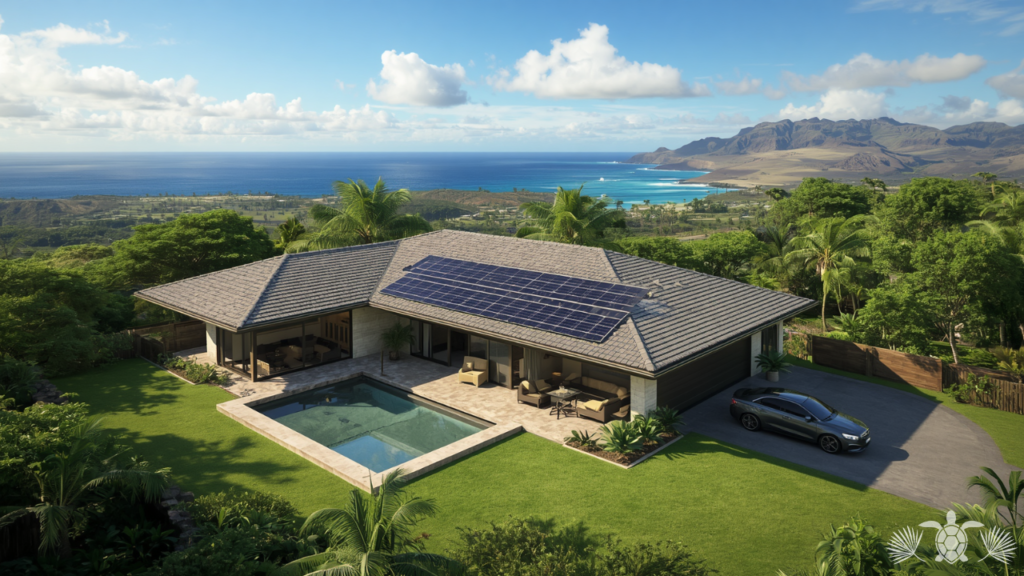
How Does Solar Affect Home Value and Appraisal in Kona?
Owned solar systems generally add appraised value in Hawaii — appraisers use a cost or income approach to assign value to functional solar installations. The amount varies based on system size, age, condition, and remaining useful life of the panels and inverter.
Leased systems, by contrast, typically add little to no appraised value — the panels belong to the solar company, not the homeowner. What you’re inheriting is a payment obligation, not an asset. This distinction matters when your lender orders an appraisal and the numbers need to support your purchase price.
From a resale perspective, owned solar is a genuine selling point in the Kona market. Buyers understand the HELCO rate environment and will pay for the certainty of low electricity costs. A home with a fully owned, well-maintained solar system and battery backup will command a premium — and sell faster — than a comparable home without it.
What About Vog and Solar Panel Performance in Kona?
This is the local nuance that mainland buyers almost never think to ask about, and it matters more than most people realize.
Vog — volcanic smog produced by ongoing eruptions at Kilauea — is a West Big Island reality. While Kona’s leeward position protects it from the worst vog days, periods of heavy vog can reduce solar panel output by measurably reducing the amount of direct sunlight reaching the panels. On high-vog days, some Kona homeowners see solar production drop noticeably.
The practical implication: if a seller or solar company gives you production estimates based on ideal conditions, ask for actual historical production data from the system’s monitoring app. Most modern inverters track daily and monthly output over time — that data tells you exactly what the system has actually produced, vog and all.
Panel maintenance also matters more in Hawaii than on the mainland. Salt air in coastal North Kona communities can degrade panel connections over time, and dust from dry lava fields accumulates on panels and reduces efficiency. Ask when the panels were last cleaned and inspected, and factor routine maintenance into your ownership cost picture.
HELCO Net Metering: What Kona Solar Buyers Need to Understand
Net metering — the policy that allows solar homeowners to send excess electricity back to the grid in exchange for bill credits — has changed significantly in Hawaii in recent years, and what a home’s current owner experiences may not be what you experience as the new buyer.
Existing net metering agreements in Hawaii are grandfathered to the current account holder in many cases. When the property changes ownership and the utility account transfers to you, you may be placed on a newer, less favorable rate structure. This is a critical detail to investigate before closing.
Ask the seller which HELCO rate schedule they are currently on, whether that agreement is transferable, and what your rate schedule will be as the new owner. Your solar savings projection depends entirely on this answer.
What Questions Should I Ask Before Buying Kona Solar Homes?
Here is the due diligence checklist I walk every buyer through before we proceed on any Kona solar home:
Is the system owned or leased? Get the documentation, not just the seller’s word.
If leased, what are the full terms? Monthly payment, escalation rate, remaining term, buyout cost, and the solar company’s subordination policy for mortgages.
What is the system’s actual production history? Pull the monitoring data, not just the spec sheet.
What HELCO rate schedule is the current owner on, and is it transferable?
How old are the panels and inverter? Solar panels typically last 25 to 30 years, but inverters often need replacement at 10 to 15 years. An aging inverter is a near-term capital cost.
Is there battery storage? A battery backup system — Tesla Powerwall is common in Kona — adds significant value and resilience, particularly given occasional grid outages on the West Side.
Has the system been professionally inspected recently? Request any inspection reports and ask your home inspector to include the solar system in their scope.

Frequently Asked Questions: Buying Kona Solar Homes
Can I get an FHA or VA loan on a home with a leased solar system in Kona? Sometimes, but it requires the solar lease company to subordinate their interest to your mortgage lender. Not all solar companies will do this, and the process takes time. Confirm the solar company’s subordination policy before removing your financing contingency.
Does solar add value to a home in Kona Hawaii? Owned solar systems generally add appraised value in Hawaii’s market, particularly given HELCO’s high electricity rates. Leased systems typically do not add appraised value since the equipment belongs to the solar company. The impact varies by system size, age, and condition.
What is the average electric bill for a Kona home without solar? Electric costs in Kona without solar can run $300 to $600 or more per month for a typical single-family home depending on size, appliances, and air conditioning use — one of the highest utility burdens of any mainland-comparable market.
What happens to a solar lease when I buy a home in Kona? The lease transfers to you as the new buyer. You inherit the payment obligation, the remaining term, and the escalation schedule. You will need to qualify with the solar company as the new lessee, which typically involves a credit check. If you do not want to assume the lease, negotiate with the seller to buy out the system at closing.
Is battery storage common in Kona solar homes? It is increasingly common, particularly in newer installations and in communities that experience occasional grid outages. Battery storage — most commonly Tesla Powerwall systems — adds meaningful value and resilience. Ask specifically whether battery storage is included and whether it is owned or under a separate lease agreement.
Learn more about leasehold and fee simple in Hawaii that buyers must know.
Thinking About Buying Kona Solar Homes?
Solar is one of the best financial tools available to Kona homeowners — when the system is owned, well-maintained, and properly understood. It’s also one of the most common sources of deal complications I see, almost always because a buyer didn’t ask the right questions early enough in the process.
I know this market, I know the solar landscape on the West Side, and I know how to protect your interests through every step of the transaction. Whether you’re looking at a leased system in a Keauhou condo complex or a fully owned rooftop array on a coffee belt property above Holualoa, let’s talk through the details before you fall in love with a listing.